Notes from Underground

Archives for May 21, 2015

Random Signals

May 21, 2015 by David Spiech

Nowadays, it’s kind of ordinary to be able to immediately read, hear, or watch some communication from anywhere in the world. Back in the mid-twentieth century, the easiest way to get foreign news was to listen to shortwave radio.

While living in Germany, I could listen to English-language news from all over the world, including the USSR. While living in the US, I could listen to German-language news.

One of my favorite things to do was compare the different versions of a story broadcast by the Voice of America, Radio Moscow, Deutsche Welle, the BBC, and other broadcasters. Later, when I was studying journalism, I mentioned to a professor how I liked listening to shortwave radio. His face contorted with disgust and he sneered something sarcastic. After that he would occasionally direct contemptuous remarks at me in class.

Eventually I figured out that because of the fall of the Soviet Union and the development of the World Wide Web, a lot of shortwave broadcasters got their funding cut in the 1990s. So, most of the stations that could be easily picked up in the US were not broadcasting international news and cultural programming, but rather religious, political, or fringe-culture programming produced within the US, as a kind of alternative media outlet.

Apparently, from the point of view of my journalism professor, shortwave radio had changed in character:  from a pluralistic forum that demonstrated the virtues of liberal democratic societies as against totalitarian societies, to an annoying cacophony of shrill, narrow-minded ideologues and fanatics. In other words, it had become just like talk radio, cable TV, and the Internet. The Internet loomed especially large as a bogeyman for journalists, since it had indirectly destroyed his career at a major newspaper, along with the careers of dozens of his coworkers.

This theme of desperation and frustrated idealism was expressed by professors and textbooks in all my journalism classes as an explicit longing for the supposed golden age of newspaper journalism, which existed for them in a sweet spot sometime between the end of World War II and the proliferation of interconnected microcomputers.

They were totally baffled by the general public’s abandonment of mass-market print journalism as the authoritative source of news. More importantly, they were deeply wounded by the outright rejection of the model of society presented by newspaper and TV journalism during the golden age. That model consisted of an ideal liberal polity where a couple of public-minded media behemoths in each market, maybe three or four in large cities, defined all the issues worth discussing, filtering out minority or fringe views and trying to lead everyone to standardized notions of patriotism, good government, civic religion, public education, popular science, consumer culture, fine arts, and great books.

I know there wasn’t actually ever unanimous agreement on what made a good society, and my teachers didn’t believe that either. In fact, that’s why the newspaper cheerleaders were so confused by the fragmentation of the mass media. They thought that their model was a perfect way to create a peaceful society unified by liberal ideals, by including as many rational voices as possible while stifling any notions of radical or reactionary change.

As it turned out, the development of moderately-priced individualized mass communication devices totally destroyed the old dream of molding society strictly through the control of information. Information still gets filtered and funneled, but for now, the filters operate according to the choices of each individual reader, viewer, or listener. And the media corporations that have the most control over information (such as Apple, Amazon, Facebook, and Google) benefit from the persistent fragmentation of the market, as long as they are able to keep aggregating producers, consumers, and sharers of information to themselves.

Those who produce content now have less potential for control, however, since the media landscape no longer supports a winner-take-all strategy. It wasn’t as if there were many actual information monopolies before, except in small markets or within the domain of sovereign governments; but everyone followed a monopolistic strategy anyway, with the goal of commanding attention long enough or broadly enough to definitively influence an issue, a region, or a genre.

In the end, the ineffectiveness of monopolistic media strategies is a cause for outrage from many different kinds of people. Yet they all want some kind of superficial unity, a consensus on some ideal that can be shared among everyone in society. If their personal ideal can’t find perfect agreement in their broader social world, they feel that chaos looms and life is hardly worth living. The random signals coming from the real world of autonomous microcultures seem to them to foreshadow an apocalyptic end to civilization, a descent into the madness of free will and individual preference.

To me, though, the whole world has always been filled with random signals from societies that are foreign to me. My upbringing taught me to regard every human society as temporary, conditional, and limited; and so any particular presentation of human society is nothing more than a curious cultural artifact.
Filed Under: Uncategorized

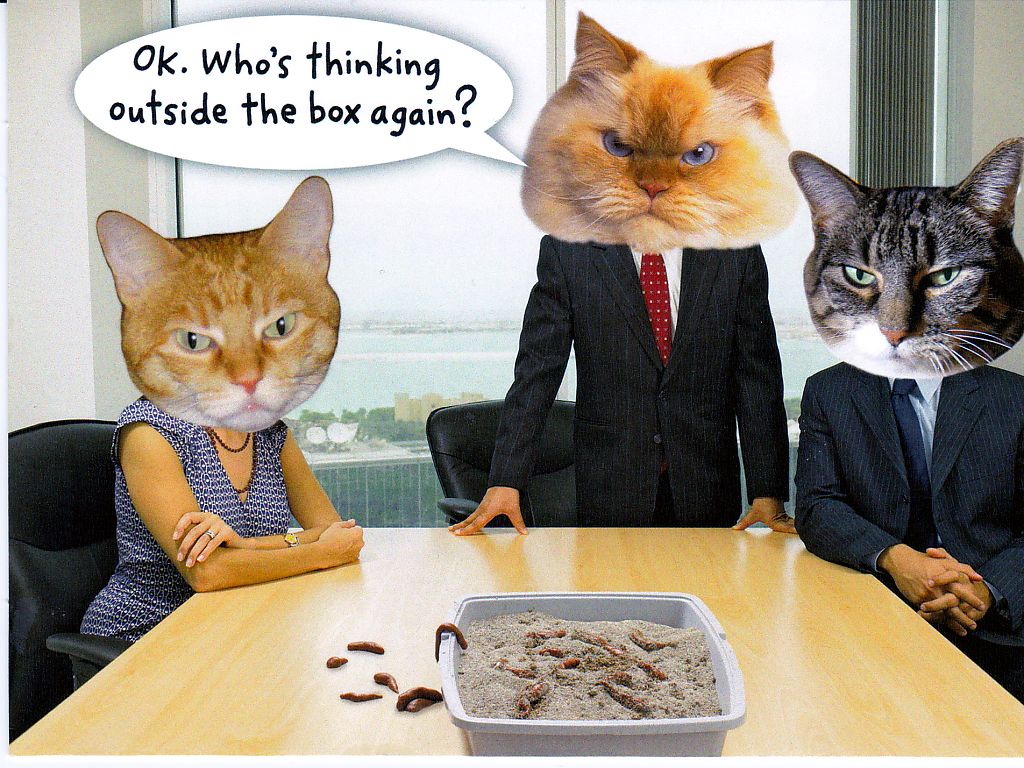
Outside the Box

May 21, 2015 by David Spiech

As long as you restrict your reading to the same echo-chamber garbage day after day, you will always be a very small, very sorry person.

I learned this early on when I realized that even though I could spell better than most people, I could also learn algebra. For some reason, most of my classmates either hated English or hated Math, if they didn’t hate every subject. When I was 14, I experimented with poetry and I experimented with deriving a progression for prime numbers that would enable me to quickly calculate square roots. I started getting really irritated by kids who would whine about how a certain subject was “impossible” for them to even make an effort to understand, not based on ability, but on their choice to stay comfortable in their little box.

Eventually, I developed an unconscious habit, perhaps even a dangerous obsession, of reacting to everything I learned by seeking out its opposite. Since I was taking advanced German, I also had to take advanced Physics. Since I was reading John Stuart Mill, I also had to read Friedrich Nietzsche. Since I was reading Robert Anton Wilson’s books (ground zero for 1980s psychedelic anarchists), I also had to read the monthly American Spectator (ground zero for 1980s paleo-conservatives).

This absurdist intellectual fantasy blew up when I chose to enroll in engineering college, even though I was a better writer than mathematician. I found myself knee-deep in math, so much so that I once had a vivid nightmare about a ten-page derivation of a single equation for a class in electromagnetic fields. (The assignment was real; that’s why I had a nightmare about it.) I was going to class and trying to pay attention, but then I would go back to my dorm room and read philosophy or stay up all night talking about theoretical physics, instead of doing homework. By the end, I was failing everything except German class.

The year before they actually kicked me out of school, I got a warning from my academic adviser. He asked me why my grades were so bad. I didn’t tell him how I was wasting my time instead of doing homework; I just said that I wasn’t sure why I was there, that I wanted to know why we were working on certain kinds of problems. He stared at me incredulously for a moment, then said, “David, engineers don’t ask ‘why,’ they just do it. Maybe you should go somewhere else and study philosophy.” I was amused and slightly offended, because everyone at engineering school knew that liberal arts majors were idiots.

A year later, I was a liberal arts major. At least I didn’t have to major in journalism; all liberal arts majors knew that journalism classes were for people who weren’t smart enough to do serious scholarly work.

Since liberal arts majors are generally encouraged to look at contradictory points of view, I was a little more comfortable. For example, I was able to get an A on a paper arguing against affirmative action by using Marxist theory. However, I wasn’t any less arrogant, so I failed freshman English three times (twice for the first semester, once for the second semester).

When it seemed to me like I would never actually graduate from college, I took a job in a machine shop while I finished writing a 2,500-word analysis of literary themes in a contemporary German novel. That job in the machine shop was the first of several low-wage jobs in factories, warehouses, restaurants, and retail stores over the next ten years.

I decided that it was really stupid to not specialize in one thing that I could do well, because then I basically looked like every other unskilled laborer. This was driven home to me when my manager at one company, in an effort to help me get promoted, told me how very important it was to create “distance” between me and the “lower” workers if I wanted to be perceived as worthy. So, just as I had done in a previous job, I did my manager’s work of documenting another employee’s incompetence and then confronting the guy to fire him. I somehow thought that would give me credibility to ask for raises for the other employees, but when I did, the assistant vice president sarcastically explained to me that it was not a good idea, because “they’ll just waste it on food and beer anyway.”

Finally, at around 32 years old, I realized that no one cared about what I could possibly do or why I did anything at all. All they cared about was whether I could actually do something better than someone else. I realized that there was only one thing I did better than most other people, which was reading academic papers. That skill transferred to editing college textbooks, but the textbook publishers wouldn’t hire someone with a German degree: “Uh . . . we need you to edit in English. Sorry!”

So, I went back to school to get a master’s degree in English. However, all the classes looked really boring, so I was going to take a bunch of electives from Journalism, but I had to get their permission. The Journalism Department persuaded me to just major in journalism instead, so that I wouldn’t have to take boring classes. That was fine, until I found out that papers for journalism classes don’t typically use rhetorical analysis or textual analysis, since those are unapproved “liberal arts” approaches to media studies. Also, journalistic assignments don’t encourage questioning a source’s credibility or presenting multiple viewpoints, because that just confuses the reader. There should be only one “government” viewpoint, only one “scientific” viewpoint, and only two “political” viewpoints.

Also, interviewing people who sincerely believe in religion or gun rights scares the crap out of the typical politically liberal journalism student. I had some fun presenting my investigation of right-wing anti-government groups that were active during the George W. Bush administration.

During this time, I was proofreading and editing textbooks for a subcontractor who didn’t care whether I had an English or Journalism degree. I did a lot of technical textbooks, mainly because they often get edited by a copyeditor, that is, someone who actually goes through the entire book, line by line, checking for consistency and accuracy. A few times I was assigned a textbook specifically because I was the only person who knew what a calculus equation was supposed to look like, or who had ever seen the inside of a machine shop.

Textbook proofreading and editing was a good idea until the publishers decided to stop editing textbooks, since “fact-checking” didn’t really matter to most people anyway, and it was cheaper to just send the manuscript from the author over to China to have it printed. That publishing approach didn’t last long, but by the time the textbook market rebounded I had gotten a full-time job in academic publishing.

The main reason I got a full-time, permanent position as a scholarly editor was because of my varied background. Most of the people with adequate academic credentials don’t have practical publishing industry experience, and most of the people with practical publishing experience don’t have adequate academic credentials. Most people who have both are successful as full-time freelance editors, so they don’t want to be constricted by working on-site all the time in an institutional job.

Of course, I made about half the income of most people my age with equivalent education, and I broadened myself so far that I was not even suited for a corporate job in commercial publishing anymore. A few years ago I applied for a copyediting job at a major publisher. After looking at my resume, he said, “I notice you’ve worked on a wide variety of books for different publishers and using different conventions. You know that we only publish one line of books at this location, right? They all have exactly the same style. I’m not sure you would be able to do it the way we need.”

Ah, well. Just leave him to his little box.

Filed Under: Uncategorized

David Spiech

David Spiech

View Full Profile →

Top Posts

  • School Is Not Life
  • The Purge
  • Time Narrows
May 2015
M T W T F S S
 123
45678910
11121314151617
18192021222324
25262728293031
    Jun »

Pages

  • Illegal and Privately Owned

RSS

  • RSS - Posts
  • RSS - Comments

Copyright © 2026 · eleven40 Pro Theme on Genesis Framework · WordPress · Log in